From the Mediterranean centre of ornamental plant production, Ibérica Garden acts as your B2B sourcing partner. We coordinate the export process with audited, official Spanish nurseries. This guide covers the phytosanitary protocols, the mandatory paperwork and the specialist logistics needed to export olive trees from Spain to the GCC.
| Specification | Details |
|---|---|
| Primary regulation | Ministry of Municipality (MME) agricultural quarantine |
| Origin certification | Official CE Plant Passport (Xylella-free zones) |
| Export certificate | CEXVEG Phytosanitary Certificate (Government of Spain) |
| Soil requirement | Agricultural soil ban (inert substrate only) |
| Sea freight transit | Approx. 20 to 30 days (reefer containers) |
The "official nursery" guarantee: Xylella-free zones
The primary concern for Qatari agricultural inspectors is Xylella fastidiosa. The most effective way to protect a shipment is to source from an audited, official nursery.
In Spain, commercial nurseries are regulated by the regional Plant Health authorities. Controls include visual field inspections, vector trapping and laboratory PCR testing of plant tissue.
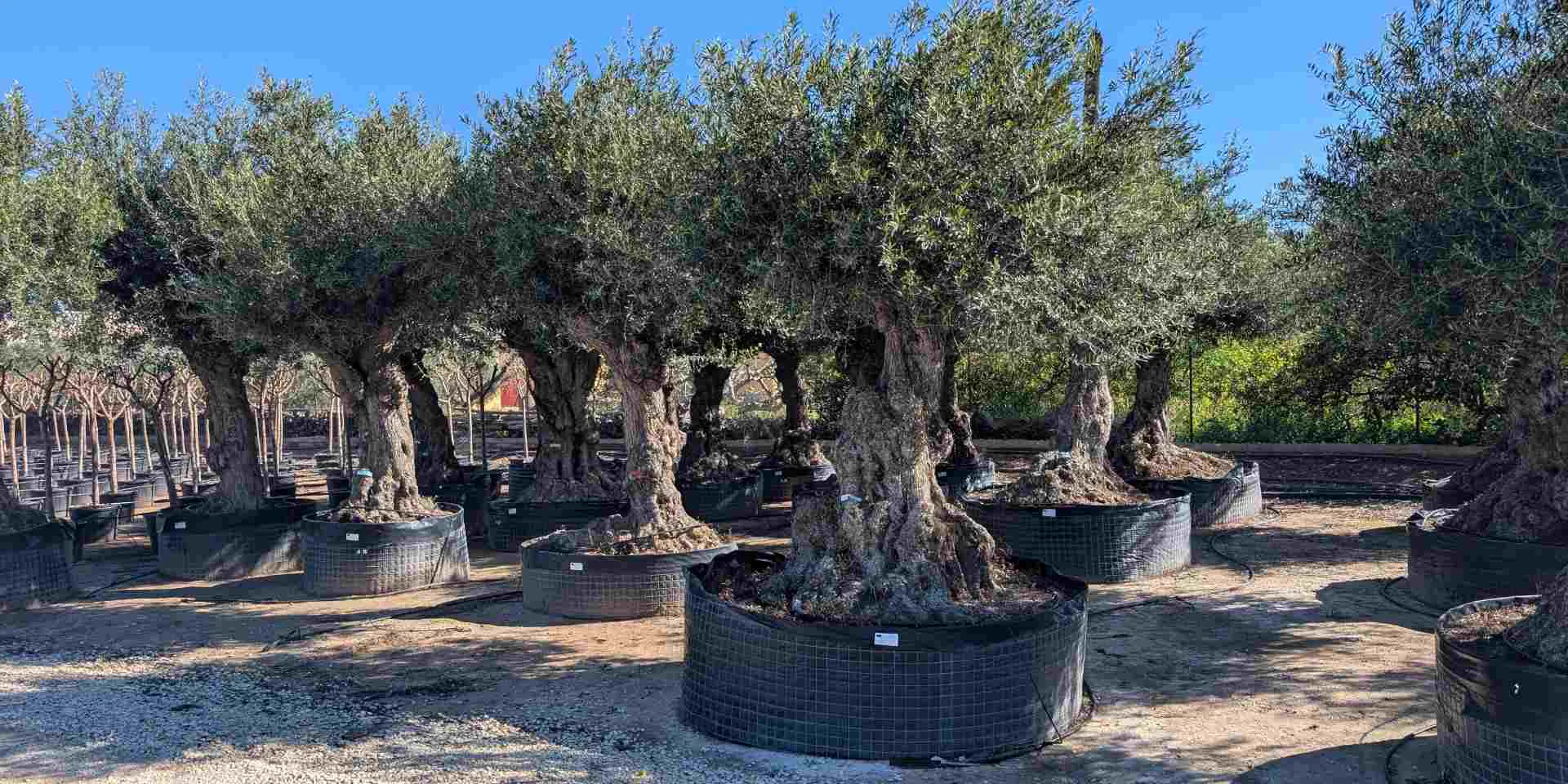
The nurseries we work with are located in Xylella-free zones and are authorised to issue the CE Plant Passport. This passport is an internal European document, but for Qatari importers it is strong proof of origin: it shows that the olive tree was grown under official plant health control before the export process begins.
Mandatory paperwork: the export and import requirements
The import permit (MME Qatar)
Before a container is booked or the trees are prepared, the importing company in Qatar must apply for an Import Permit through the Ministry of Municipality (MME). This document specifies the phytosanitary declarations the State of Qatar demands for that specific batch of Olea europaea.
The phytosanitary export certificate (CEXVEG Spain)
Once you provide your Qatari Import Permit, the export request is submitted through the Spanish Ministry of Agriculture’s CEXVEG platform. A government inspector examines the batch of olive trees designated for your project. If the specimens meet Qatar’s requirements, the inspector seals the shipment and issues the Phytosanitary Export Certificate.
Soil and root regulations for the GCC
Qatar, like most GCC countries, prohibits the import of natural agricultural soil because of the risk of soil-borne pests, specifically nematodes. To comply without compromising the tree’s survival, root preparation is planned from the start:
- Inert substrates: export-ready olive trees are established in sterile, inert substrates such as coco peat or treated peat moss.
- Root washing: for specific commercial formats, roots are washed to remove soil residue while keeping the root system intact.
The Phytosanitary Certificate includes an official declaration on the growing medium when the importing country requires it.
Logistics to Doha: how an olive tree survives a 3-week journey
Sea freight: reefer containers and induced dormancy
Standard closed containers (dry boxes) are not suitable for living plants. For the 20 to 30-day sea transit to Doha, we use reefer (refrigerated) containers.
The container is set between 12°C and 15°C, a range that induces dormancy in the olive tree. Slowing its metabolism reduces its need for water and oxygen. Combined with ventilation settings that limit humidity and fungal diseases such as Botrytis, the tree travels in a suspended state.
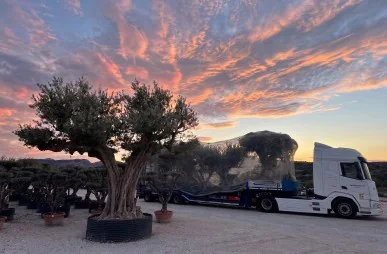
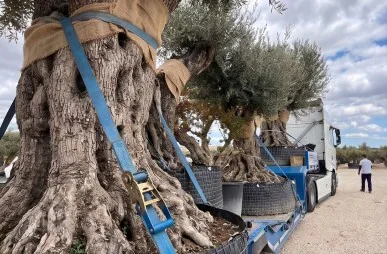
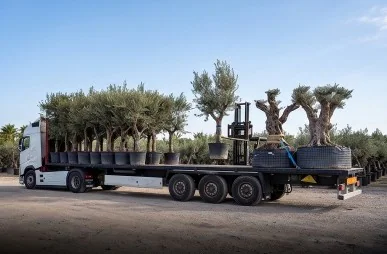
For monumental and centenary olive trees that exceed standard container dimensions, we coordinate heavy-lift logistics with open top or flat rack containers, with crane loading and unloading.